Icing Conditions & De-icing
Hazards of Icing
- Aerodynamics: Increases drag (up to 40%), decreases lift (up to 30%), increases stall speed, changes pitching moment.
- Weight: Adds weight to the aircraft.
- Instrumentation: Blockage of pitot/static ports can lead to erroneous airspeed and altitude readings.
- Engine: Ice ingestion can cause flameout or damage fan blades.
De-icing vs Anti-icing
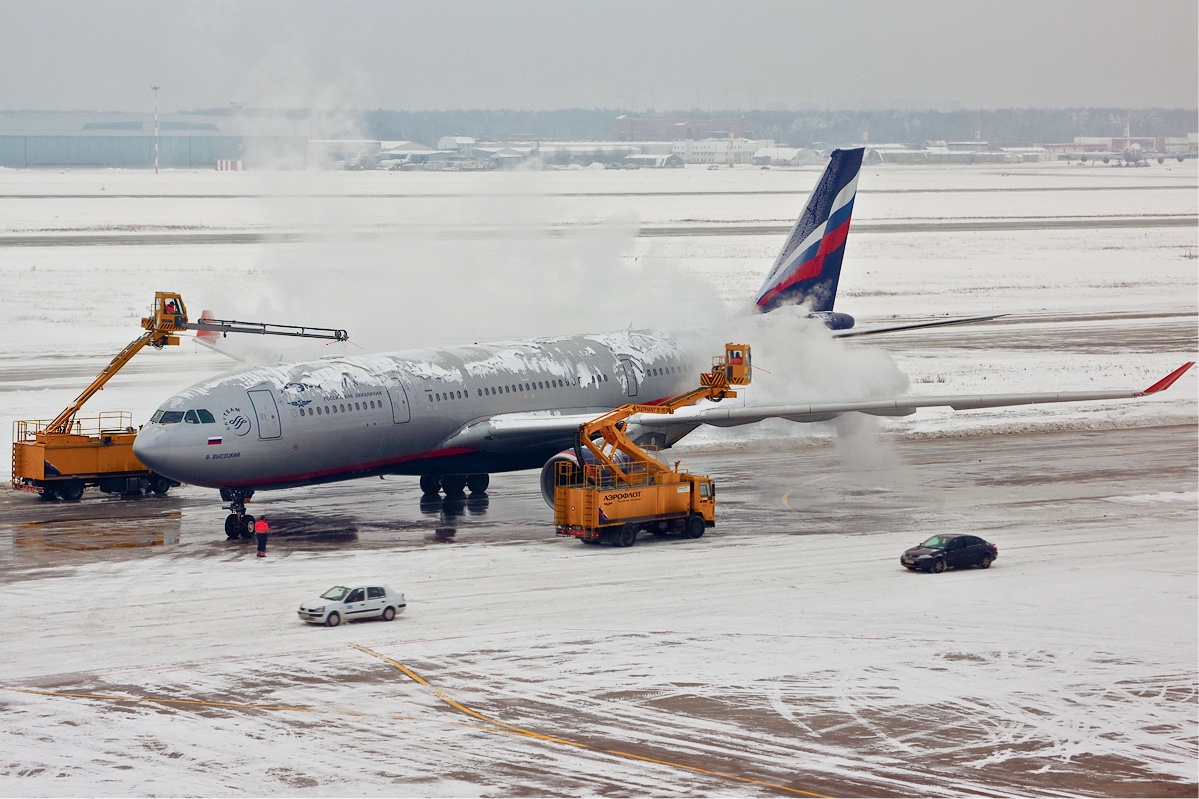
- De-icing: Removal of existing contaminants (ice, snow, slush) from the aircraft surfaces. Usually done with heated fluid (Type I) or mechanical methods.
- Anti-icing: Application of a fluid that prevents the accumulation of contaminants for a limited time.
De-icing/Anti-icing Fluids
- Type I: Orange. Low viscosity. Used for de-icing. Short holdover time.
- Type II: Light yellow. Pseudoplastic (thickens when static, shears off during takeoff). Used for anti-icing.
- Type III: Yellow. For slower aircraft (lower rotation speed).
- Type IV: Green. Thickest fluid. Longest holdover time. Used for anti-icing.
Holdover Time (HOT)
The estimated time the anti-icing fluid will prevent the formation of frost or ice and the accumulation of snow on the protected surfaces of an aircraft.
- Begins at the start of the anti-icing application.
- Influenced by fluid type, concentration, OAT, and precipitation type/intensity.
- Clean Aircraft Concept: No aircraft may take off if frost, ice, or snow is adhering to any critical surface (wings, control surfaces, etc.).