Human Information Processing
The Processing Model
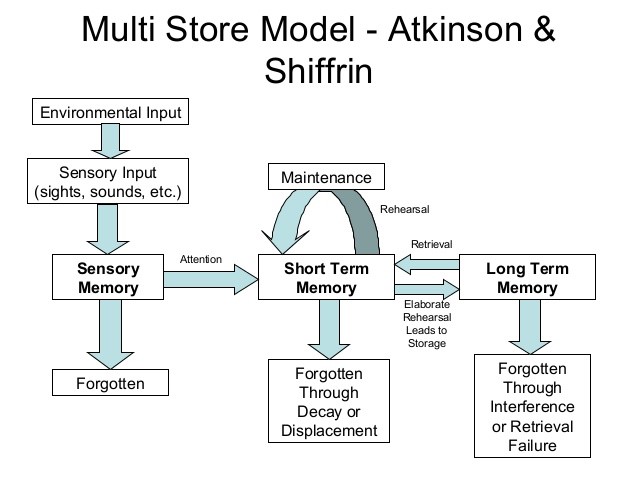
Information flows through distinct stages:
- Sensation: Receptors detect stimuli (Light, Sound).
- Sensory Memory: Holds raw data for a split second (Iconic/Visual: 0.5s, Echoic/Auditory: 2-8s).
- Perception: Giving meaning to the sensation based on experience/models (Top-down processing).
- Decision Making: Choosing an action.
- Action: Executing the response.
Memory Systems
- Short Term Memory (Working Memory):
- Capacity: Very limited (7 $\pm$ 2 items).
- Duration: 10-20 seconds without rehearsal.
- Vulnerability: Easily disrupted by distraction.
- Long Term Memory:
- Capacity: Unlimited.
- Types:
- Episodic: Events/Experiential.
- Semantic: Facts/Knowledge.
- Procedural: Motor skills (Flying "hands and feet").
Attention
- Selective Attention: Focusing on one source, ignoring others (Cocktail Party Effect). Risk of tunnelling.
- Divided Attention: Time-sharing between tasks. Performance drops as tasks increase.
- Sustained Attention: Vigilance over long periods. Hard for humans (hypovigilance).