Definition and measurement of wind
Definition
Wind is always defined by the direction from which it comes (origin).

- NE: Wind from 045°.
- SE: Wind from 135°.
- SW: Wind from 225°.
- NW: Wind from 315°.
Measurement
Surface wind is measured by anemometers (speed) and wind vanes (direction) located at a standard height of 10 meters above the ground.
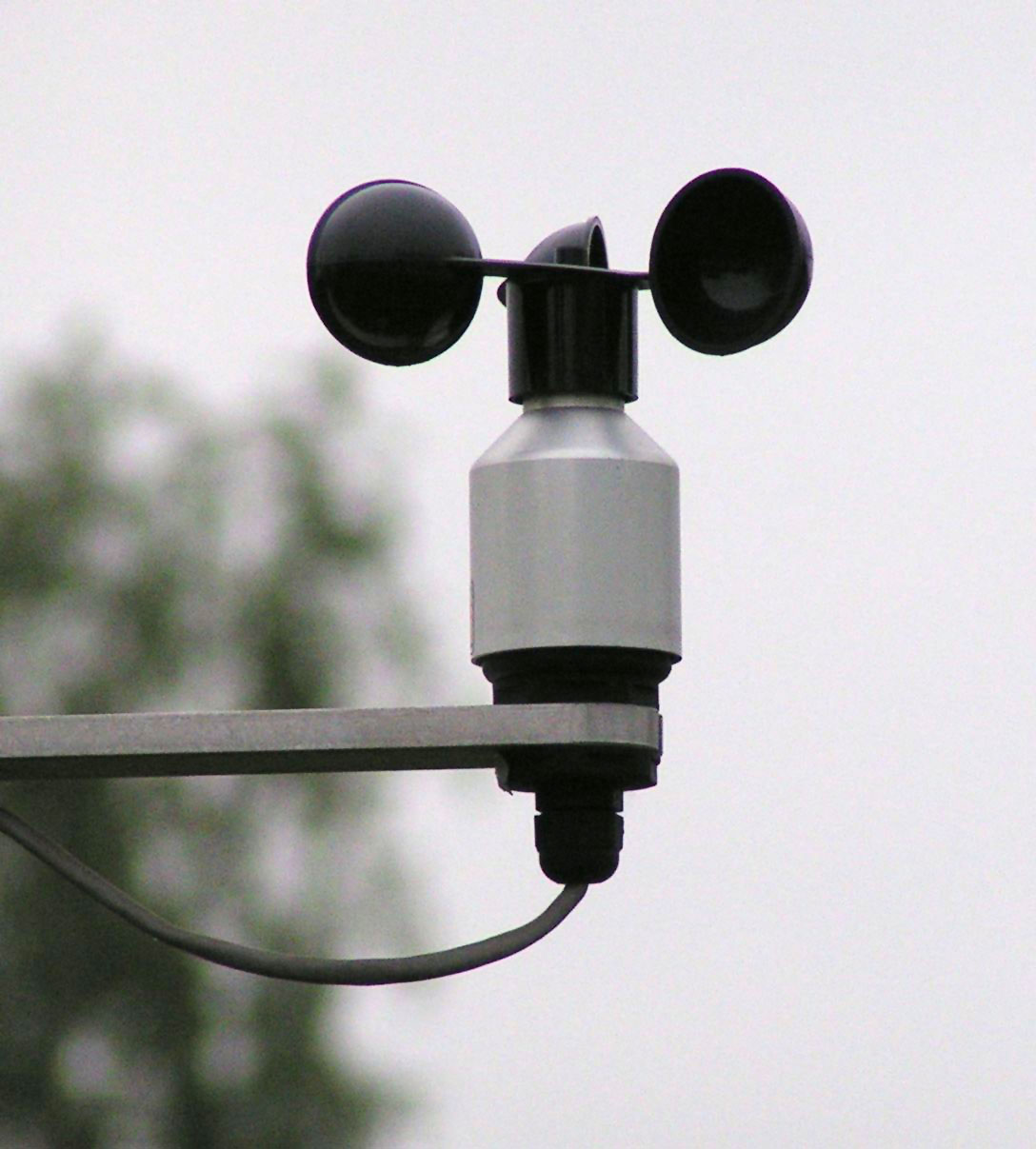 Anemometer used for measuring wind speed.
Averaging Periods and Reference
How wind is reported depends on the type of report:
METAR / SPECI (Aerodrome Meteorological Reports):
- Average: 10 minutes.
- Direction: True degrees.
- Gusts (G): Reported if the maximum speed exceeds the average by at least 10 knots.
- Note: VOLMET reports transmit METAR/TAF, so they use true degrees.
Local Reports / ATS / Tower (ATIS, Takeoff/Landing Clearances):
- Average: 2 minutes.
- Direction: Magnetic degrees.
- This is crucial to match the aircraft compass reference and runway orientation (which is magnetic).
Effect of Friction
Friction with the Earth's surface reduces wind speed compared to winds aloft (geostrophic/gradient).
- Over water: Speed reduces to approx. 70%.
- Over land: Speed reduces to approx. 50%.