Change of state of water
Water exists in the atmosphere in three states: solid (ice), liquid (water), and gas (water vapor). Changes between these states involve the absorption or release of energy in the form of Latent Heat.

Phase Change Processes
1. Processes that Absorb Latent Heat
These processes take energy from the environment, cooling the surrounding air.
- Melting: Solid $\rightarrow$ Liquid. (~80 cal/g)
- Evaporation: Liquid $\rightarrow$ Gas. (~590 cal/g)
- Sublimation: Solid $\rightarrow$ Gas (directly). (~680 cal/g)
2. Processes that Release Latent Heat
These processes release energy to the environment, warming the surrounding air.
- Freezing: Liquid $\rightarrow$ Solid. (~80 cal/g)
- Condensation: Gas $\rightarrow$ Liquid. (~590 cal/g)
- Deposition: Gas $\rightarrow$ Solid (directly). (~680 cal/g)
- Note: In meteorology (especially in the US), the term "Sublimation" is sometimes used for the Gas to Solid change as well, although the correct technical term is Deposition.
Importance of Latent Heat
The energy involved in evaporation and condensation is enormous compared to melting/freezing.
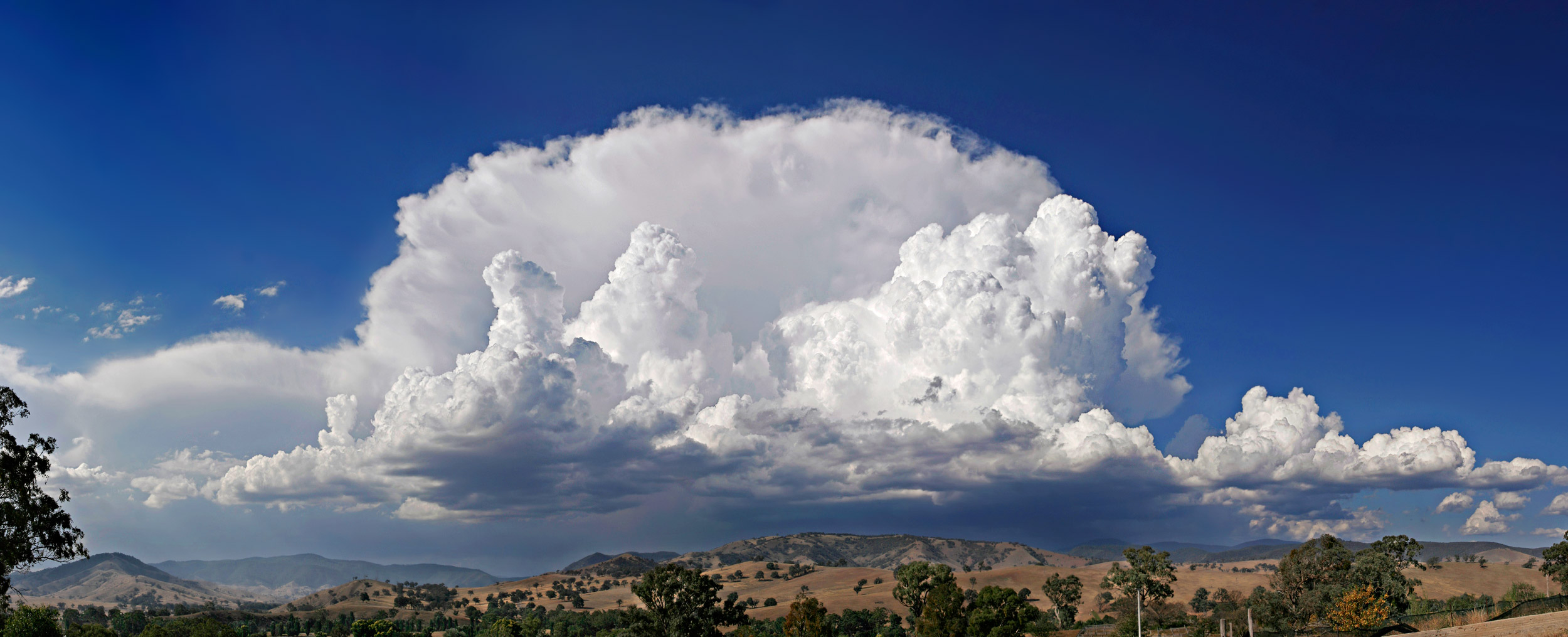
- Storm Engine: When water vapor condenses to form clouds, it releases a large amount of latent heat. This heat warms the air inside the cloud, making it lighter than the surrounding air, which encourages continuous ascent (instability).
- Energy: This release of latent heat is the main source of energy for the development of thunderstorms and hurricanes.
Cloud Formation
For clouds to form, three ingredients are needed:
- Water Vapor: Moisture in the air.
- Cooling: The air must cool to its dew point (saturation).
- Condensation Nuclei: Microscopic solid particles (dust, salt, smoke) on which vapor can condense.
- Without nuclei, the air could become supersaturated (RH > 100%) without forming clouds.
Supercooled Water Droplets (SCWD)
These are water droplets that remain in a liquid state at temperatures below 0°C.

- To freeze, they need to come into contact with a freezing nucleus or a solid surface (such as an aircraft).
- In the atmosphere, there are many more water droplets than freezing nuclei, so supercooled water is very common in clouds between 0°C and -15°C (and even down to -40°C).
- They are the main cause of icing on aircraft.